





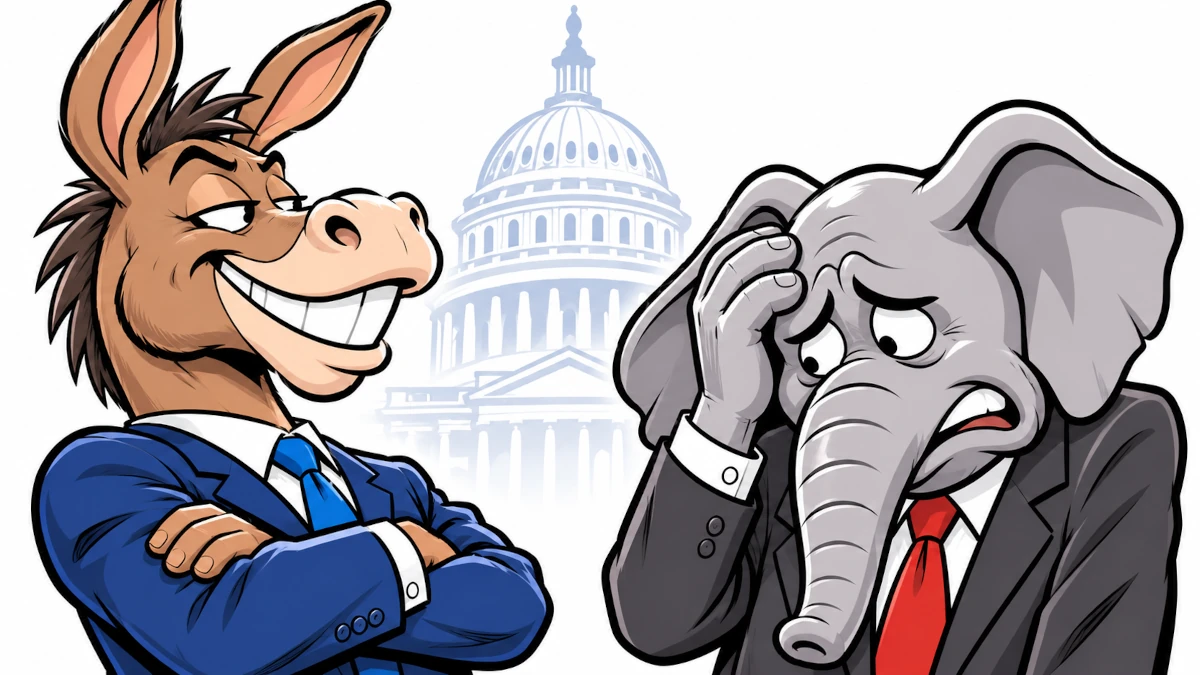
Democrats have won majorities in both the United States House of Representatives and Senate following the November 3 midterm elections, ending Republican control of both chambers of Congress.
The change will not take effect immediately. Republicans remain in control of the outgoing Congress until the newly elected members begin their terms on January 3, 2027.
The result means Democrats will control the legislative branch of government for the remaining two years of Republican President Donald Trump's presidency.
Congress is responsible for passing federal legislation, approving government spending and overseeing the executive branch. Controlling both chambers allows Democrats to set legislative priorities, lead congressional committees and conduct investigations into the Trump administration.
The Senate also has responsibility for confirming presidential appointments, including Cabinet officials and federal judges.
However, Democratic control of Congress does not mean control of the presidency. Trump retains his executive powers and the authority to veto legislation passed by Congress. Overriding a presidential veto requires a two-thirds majority in both chambers.
The next regularly scheduled congressional elections will take place on November 7, 2028, alongside the presidential election.
All 435 voting seats in the House of Representatives will again be contested, along with 34 of the Senate's 100 seats.
Special elections may occur earlier to fill vacancies, but November 2028 will provide the next nationwide opportunity for voters to change the political balance in Congress.

