


From Hormuz to Your Mortgage
Oil Shock Adds to New Zealand Inflation

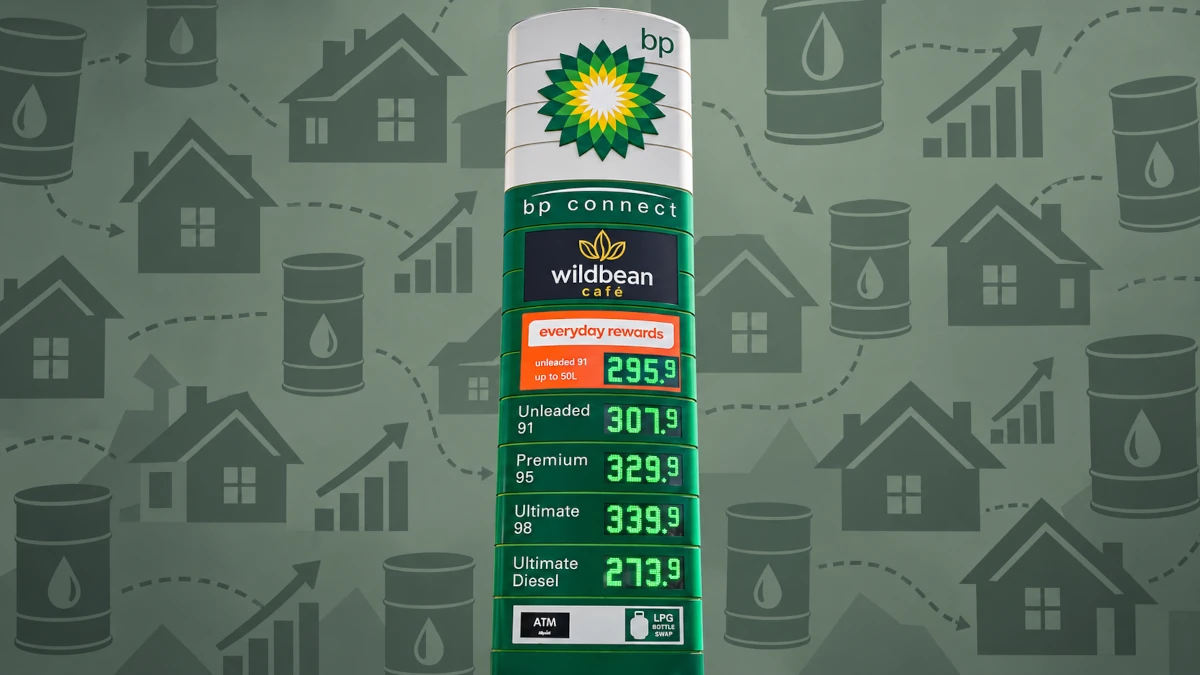
A missile fired in the Gulf can end up costing a New Zealand homeowner money. Oil prices are again closing in on US$100 a barrel, fuel supplies are tightening and the Reserve Bank has already blamed the Middle East conflict for much of New Zealand's latest inflation surge. The battlefield is thousands of kilometres away. The bill does not need a passport.
Brent crude settled at US$97.92 a barrel on September 8, its highest close in around six weeks. New Zealand, meanwhile, entered September with annual inflation at 4.1 percent and an Official Cash Rate of 2.75 percent. The Reserve Bank says higher fuel prices caused by the Middle East conflict were largely responsible for inflation rising from 3.1 percent in the March quarter to 4.1 percent in the June quarter. Fuel alone contributed 1.2 percentage points to annual inflation in the June quarter.
The Oil War Widens
Iran-backed Houthi forces struck Saudi energy facilities on September 8, while the United States resumed attacks on Iranian tankers. Iran has also threatened shipping around the Gulf and announced plans for a new maritime exclusion zone through Hormuz. Kpler recorded only seven commodity vessels passing through the strait on September 7.
Brent crude has still struggled to break decisively above US$100 a barrel. Oil is continuing to move through the Strait of Hormuz, alternative export routes remain open, and higher production elsewhere is helping replace some of the lost supply. The market is under pressure, but it is not being starved of oil.
From Fuel to Food, Then the Mortgage
New Zealand has already had a preview. The latest official MBIE figure available at the start of September put the national average advertised price of regular 91 petrol at NZ$3.02 a litre for the week ending August 30. The Reserve Bank also expects higher fuel, transport, fertiliser and petroleum-related costs to keep feeding into prices during the rest of 2026.
The RBNZ estimates those indirect effects could add 0.9 percentage points to annual inflation by the December quarter. Higher transport and production costs can spread into food, construction and other services.
That is how Hormuz reaches a New Zealand mortgage. The Reserve Bank is trying to stop the oil shock from becoming embedded in wages and wider prices. That concern helped push the OCR to 2.75 percent, and the Bank says it may need to rise further.
The Bigger Squeeze Is Refined Fuel
The bigger squeeze may be in refined fuel rather than crude.
Vitol chief executive Russell Hardy says the world is missing around 2 million barrels a day of refined products from Russia and nearly another 2 million from the Middle East. Diesel stocks are falling, while many refineries have little spare capacity.
Crude still has to be turned into diesel, petrol or jet fuel before it can power trucks, tractors and aircraft. Tight refining capacity can keep those fuels expensive even if crude stays below US$100.
The Real Risk Is Not $100
US$100 oil makes a good headline. The more important question is whether high energy prices linger.
A short spike can wash through inflation relatively quickly. A prolonged squeeze gives higher costs time to spread, settle and start influencing wages and pricing decisions. For the RBNZ, that is the dangerous part because temporary imported inflation can become a domestic inflation problem.
The Strait of Hormuz does not have to close, and Brent crude does not have to hit US$120 a barrel, for New Zealand to feel the consequences. The pressure is already showing up in inflation and interest rates. The real risk is not oil briefly breaking US$100. It is how long it stays there.