


New Zealand Is Cooked
Punishing Rent, Young Kiwis Leaving, Election 2026 Is Here

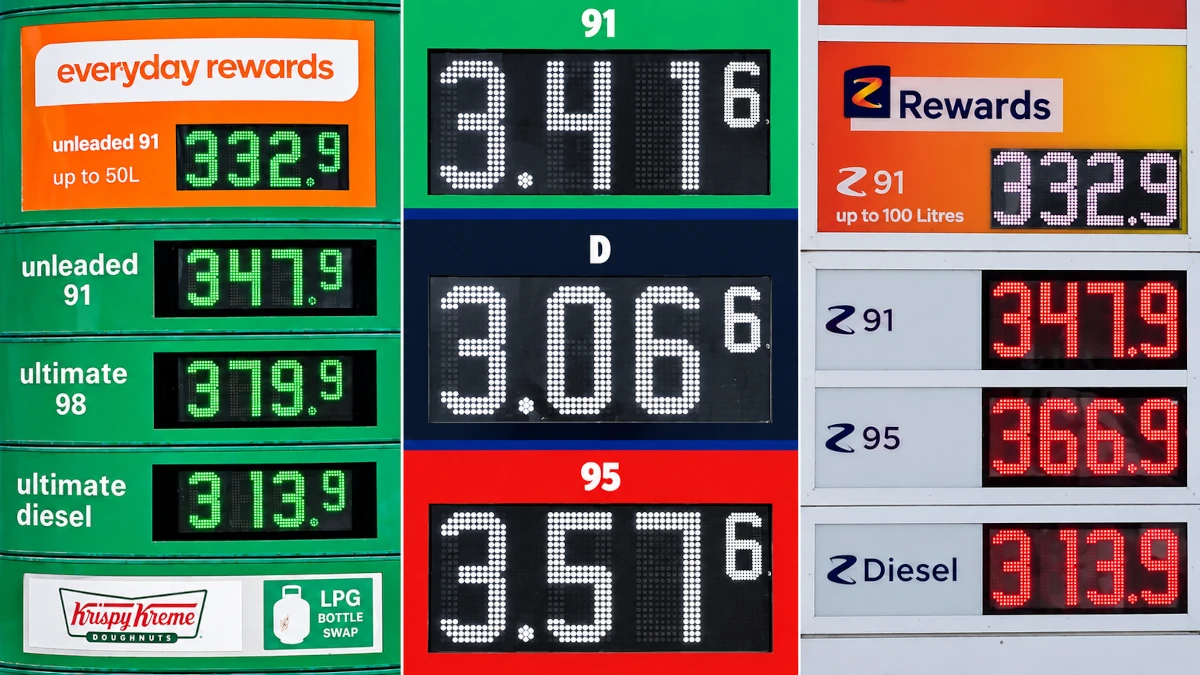
As New Zealand's petrol prices again sit above $3 a litre, most New Zealanders are probably unaware that this is Parliament's final sitting week before the November 7 general election, now just over six weeks away.
The Government has spent its final days scrambling to clear its remaining business, including passing legislation to replace the Resource Management Act, while New Zealand's free trade agreement with India has now been ratified.
Today, Wednesday, is the final sitting day of the 54th Parliament. Then the politicians are free to turn their full attention to the campaign trail.
And National and Labour desperately need to.
Labour spent much of the election cycle around the low 30s before sliding into the mid-20s, while National has spent much of the year hovering around 30 percent. The latest Curia public polling average now has them virtually tied, with National at 29.0 percent and Labour at 29.2 percent.
More than 40 percent of voters aren't buying what either National or Labour is selling, and to make matters worse, they don't even have much for sale.
Petrol is above $3 a litre. Electricity prices are up sharply. Rents remain punishing. Annual inflation is 4.1 percent. Unemployment is 5.6 percent and underutilisation is 13.8 percent.
The New Zealand dollar has been weak for far too long and recently traded around 13-year lows against the Australian dollar, adding to the cost of imported goods.
Meanwhile, younger New Zealanders continue to look across the Tasman at higher wages, a much larger labour market and, in many cases, cheaper consumer goods.
In short, a higher standard of living.
Yet here comes another election campaign.
TVNZ and RNZ will assign reporters to follow Christopher Luxon and Chris Hipkins around the country. There will be supermarket visits, factory visits, carefully staged announcements and televised debates. Both leaders will be hoping another percentage point here and another percentage point there puts them in a position to form the next government.
But perhaps National and Labour aren't chasing that 40 percent anymore.
They're both chasing the same people.
Baby Boomers.
Older New Zealanders are electoral gold.
They are far more likely to own their homes, far less likely to have a mortgage and, crucially, they actually vote.
At the 2023 election, turnout among enrolled voters aged 65 to 69 was 85.3 percent and among those 70 and older it was 84.9 percent. Among 25 to 29-year-olds it was just 69.1 percent.
All over New Zealand, the Baby Boomers wait.
The mortgage was paid off years ago. NZ Super arrives every fortnight. Their three or four-bedroom house is worth considerably more than it cost. Perhaps a rental property is ticking away nicely in the background.
Maybe they're in a retirement village. Maybe they're still working. Maybe they're sitting at home drinking a glass of wine and falling for the latest AI scam on Facebook.
But they're here.
They vote.
And the television remote is in hand, ready to go.
What are the pollies going to do for them this year?
Quite a lot, apparently.
Labour wants a 28 percent capital gains tax on profits made after July 1, 2027 when residential or commercial investment property is sold, while leaving the family home untouched.
And what does it want to spend the money on?
Healthcare.
Its plans include three free doctor's visits every year for every New Zealander and other health initiatives.
The benefits are universal, although an ageing population hardly makes free access to doctors an unattractive proposition for older voters.
National has another idea.
Let younger New Zealanders borrow more money to buy the Boomers' houses.
Its expanded First Home Loan policy would allow eligible buyers to purchase with deposits as low as 5 percent, with the household income cap lifted to $300,000.
It is sold as helping younger New Zealanders into their first home.
Perhaps it will.
But a 5 percent deposit doesn't make a $900,000 house cost $600,000. It simply makes it easier to borrow the money required to pay $900,000.
Someone still gets the $900,000.
Quite often that will be an older homeowner cashing out a property accumulated during one of the greatest housing booms in New Zealand's history.
So one answer to housing unaffordability is apparently to help Millennials and Gen Z take on enormous mortgages to buy overpriced property from the generations that already own it.
Someone has to be left holding the bag.
Brilliant.
Then there are supermarkets.
Both National and Labour have devoted extraordinary political attention to grocery prices, apparently believing the cost-of-living crisis can finally be defeated somewhere between the broccoli and the breakfast cereal.
Groceries matter.
But New Zealanders aren't struggling because somebody put another 50 cents on a bag of mixed vegetables.
Petrol is above $3. Electricity was 12 percent more expensive in the June quarter than a year earlier. Petrol was up 27.5 percent. Unemployment is 5.6 percent, with around 171,000 New Zealanders unemployed and hundreds of thousands more underutilised.
Rent, electricity, petrol, insurance, rates and food are all competing for the same pay packet.
And underneath much of it sits New Zealand's favourite economic sacred cow.
Property.
New Zealand increasingly has two economies.
One for people who own assets.
Another for people who work for wages and pay to use them.
House prices rise?
Wonderful if you own three.
Catastrophic if you're trying to buy your first.
Interest rates rise?
Painful if you have a $700,000 mortgage.
Potentially rather pleasant if you have $700,000 sitting in term deposits.
Rents rise?
Disaster for the tenant.
More income for the landlord.
These people do not experience the same economy.
Yet for decades, rising house prices have been treated as something approaching an economic achievement.
If property prices so much as looked like stalling, out came the speculators and property lobbyists, spouting warnings about declining household wealth and preaching the gospel of the “wealth effect” — the idea that homeowners who feel richer will spend more and stimulate the economy.
Apparently making the oldest, most asset-rich part of the population even wealthier is going to unleash an economic miracle upon New Zealand.
Perhaps another $200,000 of equity in the family home will finally inspire that 72-year-old retiree to launch New Zealand's answer to Nvidia and OpenAI.
Any day now.
Younger New Zealanders, meanwhile, have another economic strategy available to them.
Leave.
Australia is right there.
And they are going.
In the year to March, 62,800 New Zealand citizens left the country as long-term migrants. Almost 25,000 of them were aged just 18 to 30.
Based on the latest estimates, around 63 percent of departing New Zealand citizens went to Australia.
That's not some marginal group disappearing overseas. Forty percent of all departing New Zealand citizens were aged between 18 and 30.
For a young New Zealander without a house, without a particularly good job and without much prospect of acquiring either, moving across the Tasman isn't necessarily political.
It's arithmetic.
Higher wages. A much larger labour market. More employers. More cities. New Zealand citizens can also live and work there without first obtaining a conventional work visa.
So while the political system remains extraordinarily sensitive to property wealth and reliable older voters, thousands of the people expected to work, pay taxes, start businesses and fund the country for the next 40 years are asking a much simpler question.
Why stay?
National and Labour now have six weeks to convince them.
Luxon and Hipkins will debate.
Political reporters will follow.
There will be supermarket photo opportunities, housing announcements and promises about the cost of living.
Perhaps some of that 40 percent will come back. Perhaps not.
One thing, however, is certain.
The Baby Boomers will be paying attention.
Their houses were bought decades ago.
Their mortgages are gone.
NZ Super hits their accounts every fortnight.
The television remote is in hand.
The Boomers will be watching.
The question is whether everybody else has already changed the channel, or simply turned the television off completely.