




New Zealand Raises Rates Again as Inflation Bites
RBNZ Lifts Cash Rate to 2.75% Despite a Weak Economy

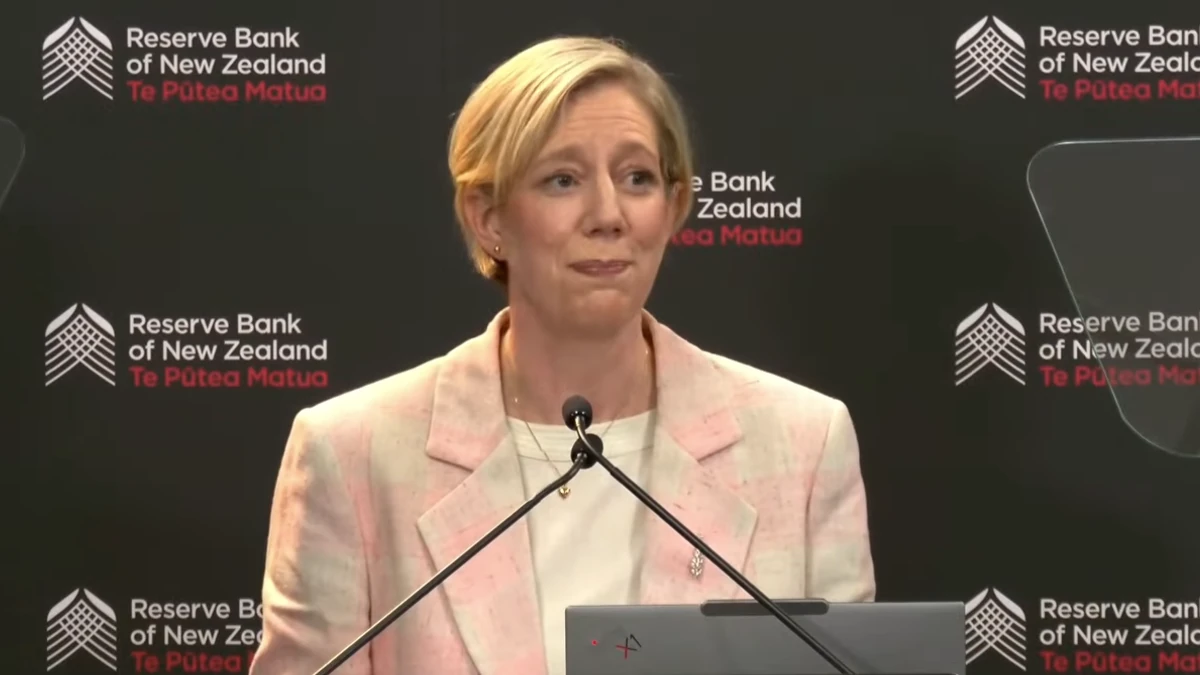
The Reserve Bank of New Zealand (RBNZ) has raised the Official Cash Rate by another 25 basis points, taking it from 2.50% to 2.75% and completing the second consecutive hike. Less than a year ago the RBNZ was cutting rates to 2.25% to rescue a weak economy. Now it is raising them to restrain inflation in, well, a weak economy. Central banking is a wonderful profession: when the medicine does not work, adjust the dosage and change the label.
The reason for the reversal is inflation. Annual CPI inflation climbed to 4.1% in the June quarter, above the RBNZ's 1% to 3% target range and higher than its own 3.9% forecast. Much of the increase came from fuel prices driven higher by the Middle East conflict. Strip out vehicle fuels and annual inflation was a much more respectable 2.9%, with most measures of core inflation sitting inside the target band.
That leaves the Bank fighting two rather different beasts. One is domestic inflation, which appears relatively contained. The other is imported inflation from energy, petrochemicals and disrupted global supply chains, over which the RBNZ has approximately the same control as Wellington has over the weather.
The Bank's concern is not simply that petrol has become more expensive. It fears higher energy and import costs will spread into broader business pricing, turning a temporary price shock into persistent price pressure. Four of the six members of the Monetary Policy Committee see inflation risks tilted to the upside, warning that businesses could front-load price increases and raise prices by more than their actual higher costs warrant.
In plain English, petrol goes up, freight goes up, packaging goes up, then somehow the price of everything from a haircut to a hamburger discovers it has also been affected by the Strait of Hormuz.
So the RBNZ is tightening now in the hope that a little pain today prevents considerably more pain tomorrow. All six committee members agreed to the latest increase, arguing that gradually removing monetary stimulus reduces the risk of being forced into faster and larger hikes later.
But despite the talk of tightening, money in New Zealand remains remarkably cheap. At 2.75%, the OCR remains below the US Federal Reserve's 3.50% to 3.75% target range and well below Australia's 4.35% cash rate. More importantly, it remains below New Zealand's own 4.1% headline inflation rate.
That means the real OCR, measured crudely against current CPI inflation, is still about negative 1.35%. Call it tightening if you like, but when the cash rate remains well below the rate at which cash is losing purchasing power, the monetary screws are hardly being turned with a wrench.
This matters because New Zealand has spent years rewarding borrowers more enthusiastically than savers. Cheap credit helped inflate property prices, while households holding cash watched inflation quietly nibble away at its value. Even after two OCR hikes, that fundamental equation has not entirely disappeared.
The problem is that this particular tightening cycle is arriving without the usual booming economy attached.
The RBNZ itself described June-quarter growth as "lacklustre". The recovery remains patchy, private spending remains soft and unemployment has climbed to 5.6%, its highest level in more than a decade. Exporters and some regional economies are enjoying strong commodity prices, but businesses dependent on domestic demand are still doing it tough.
Households are hardly dancing in the aisles either. Job insecurity, weak income growth and subdued house prices are encouraging caution rather than consumption. The Bank expects spending to strengthen as real incomes recover and house prices stage what it calls a "modest recovery".
There is something almost uniquely New Zealand about worrying that houses are too expensive, cutting rates, hoping house prices recover, then raising rates because inflation is too high. The housing market is apparently both patient and prescription.
Banks, meanwhile, have shown their usual talent for selective speed. The RBNZ noted that higher wholesale rates have flowed through into mortgage and business lending rates, while the increase passed on to term-deposit customers has been more modest. The Bank politely suggested deposit rates should rise further. Borrowers may observe that banks rarely require such encouragement when rates are moving in the other direction.
The RBNZ now faces an awkward arithmetic. Inflation is 4.1%, unemployment is 5.6%, growth is weak and household spending is subdued. Raise rates too far and the recovery gets rattled. Raise them too slowly and imported inflation risks becoming embedded domestic inflation.
With the Monetary Policy Committee warning that the OCR may need to rise further, 2.75% is seemingly not the RBNZ's final destination.

