





Australia has raised interest rates to their highest level in 18 years, yet the Australian dollar weakened following Tuesday's announcement, while the New Zealand dollar gained modestly against its neighbour.
The Reserve Bank of Australia (RBA) increased its cash rate by 25 basis points to 4.85% on November 3, its fifth increase this year. Six of the nine board members supported the decision, while three preferred to leave rates unchanged at 4.60%. The new rate takes effect on November 4.
Before the announcement, markets had priced an 88% probability of an increase, according to Reuters. The decision itself was hardly a surprise. What attracted attention was the RBA's accompanying statement and what it might mean for future increases.
In September, the RBA explicitly mentioned raising rates further if necessary. Tuesday's statement omitted that wording, although the bank maintained its commitment to controlling inflation. Traders interpreted the change as a possible signal of a pause, rather than a guarantee that further increases were finished.
Reuters reported that the Aussie initially fell around 0.3% against the US dollar as expectations of additional tightening weakened.
The RBA's official exchange-rate figures showed one Australian dollar buying US$0.6976 and NZ$1.2404 at 4pm Sydney time, down from US$0.7023 and NZ$1.2505 respectively the previous afternoon.
In reverse, NZ$1 bought approximately 80.6 Australian cents, up from 80.0 cents, an increase of roughly 0.8% between the two observations. These figures do not establish how much of the movement occurred immediately after the decision.
So why would the Aussie weaken following an interest rate increase?
Because markets had already anticipated the hike. Investors were assessing whether Australia's interest-rate outlook had changed, rather than reacting simply to the new rate.
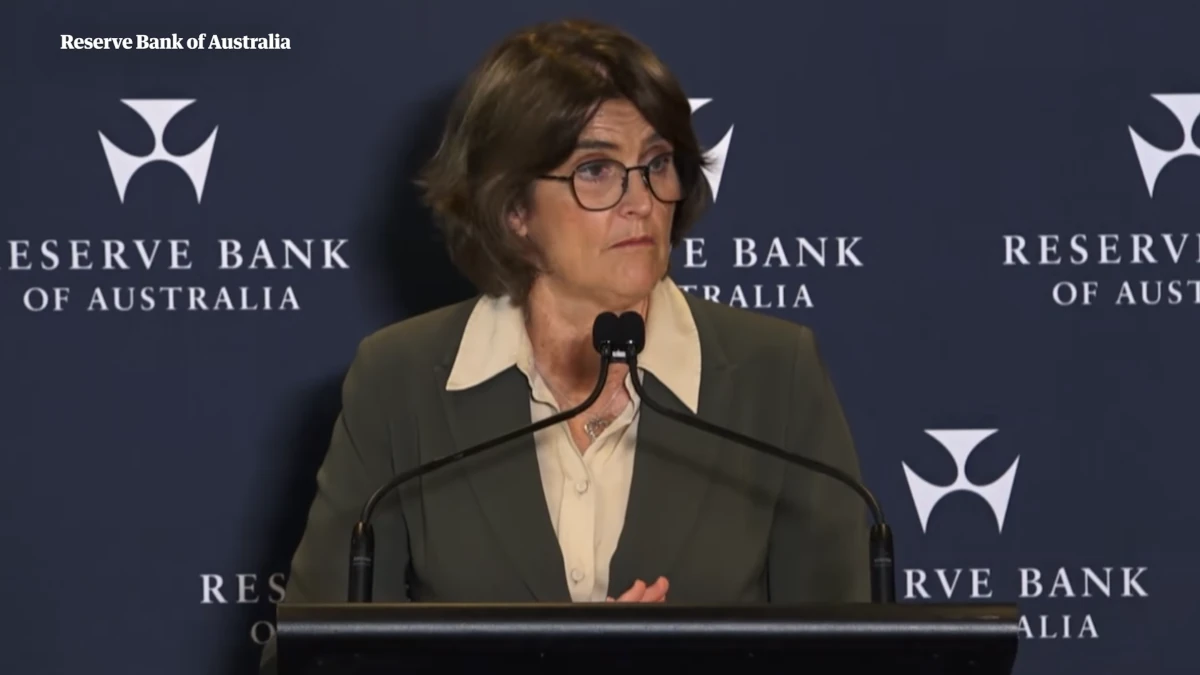
At her subsequent press conference, RBA Governor Michele Bullock explained that the three members favouring a hold were concerned about rising unemployment, housing weakness and the cumulative effects of previous increases. She nevertheless cautioned that further tightening could remain necessary.
Australia's annual inflation reached 4.3% in September, while the RBA now forecasts 4.5% for the December quarter. The central bank also expects falling property values to weigh on household spending and residential construction.
Across the Tasman, New Zealand's Official Cash Rate remains at 2.75%. Australia's increase will widen the difference to 2.10 percentage points from November 4. Meanwhile, RBNZ Governor Anna Breman has described the likelihood of a December increase as high, adding another consideration for currency markets.
As TheZeal reported on Monday, the Aussie had been trading near a 13-year high against the Kiwi.
Tuesday's modest gain offers negligible relief to New Zealanders buying Australian goods or travelling across the Tasman, and may not even last.
The Australian dollar's interest-rate advantage has widened, not narrowed. A single day's currency movement is not enough to establish a lasting change in direction.

