




Spider-Man’s $2.5 Billion Web
Sony Gets the Movies, Disney Gets the Merchandise

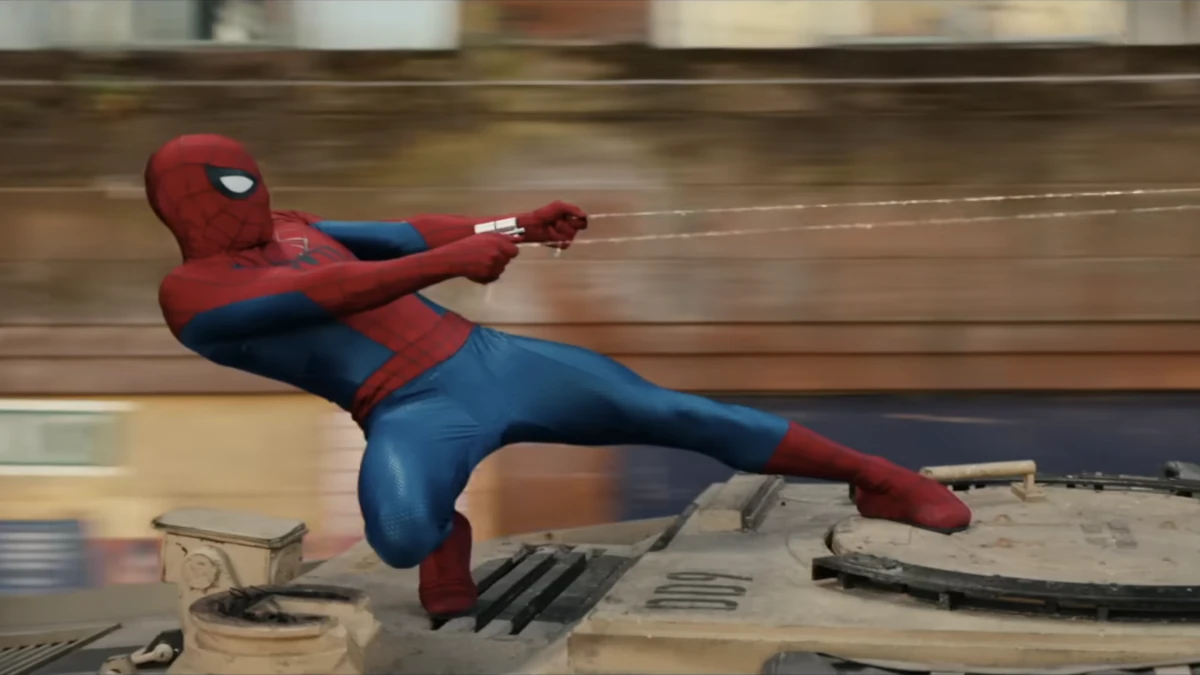
Superhero movies have been having a rough time at the box office. Spider-Man: Brand New Day clearly did not get the memo.
Since arriving in cinemas in July, the film has grossed approximately US$2.48 billion worldwide, making it the biggest movie of 2026 and the third-highest-grossing film in history in nominal dollars, behind only Avatar and Avengers: Endgame. Nominal dollars means the grosses are compared without adjusting older ticket sales for inflation.
In North America, Brand New Day has taken approximately US$944.4 million, passing Star Wars: The Force Awakens to become the largest unadjusted North American box-office gross on record.
That is quite a lot of money for a character whose ownership requires something approaching a flow chart to explain.
It is even more impressive against a reported production budget of about US$225 million. The complete worldwide marketing bill has not been disclosed, although a movie of this scale obviously does not advertise itself for free.
Nor does US$2.48 billion in ticket sales mean Sony gets to wheel US$2.48 billion into the company vault. Cinemas keep a substantial portion of ticket receipts before the distributor gets its share, while production costs, marketing, talent participation and other expenses still have to come out.
At this point, whether Brand New Day made money is no longer the interesting question.
The interesting question is who gets how much.
Disney owns Marvel. Marvel owns Spider-Man. Sony, however, controls Spider-Man at the cinema.
The arrangement dates back to before Disney bought Marvel in 2009. Marvel had already licensed the rights to produce and distribute Spider-Man films to Sony, and Sony continues to hold those rights today.
In 2015, Sony and Marvel Studios struck the deal that brought Spider-Man into the Marvel Cinematic Universe. Sony retained the right to finance, distribute and own the Spider-Man films, along with final creative control, while Marvel Studios president Kevin Feige and his team became involved in producing them and weaving Spider-Man into the wider MCU.
Brand New Day continues that model. Sony-owned Columbia Pictures produced the film alongside Marvel Studios and Pascal Pictures, the production company of longtime Spider-Man producer and former Sony Pictures co-chair Amy Pascal. Feige and Pascal are both credited as producers, while Sony handles theatrical distribution.
So far, so complicated.
The precise financial split is harder to untangle. In 2019, after Sony and Disney briefly fell out over Spider-Man and then patched things up, people familiar with the agreement told the Los Angeles Times that Disney would finance 25 percent of Spider-Man: No Way Home and receive 25 percent of its profits.
That arrangement is well documented for No Way Home. The financial terms applying specifically to Brand New Day have not been made public, and Pascal has described the Sony-Marvel relationship as working on a picture-by-picture basis. It would therefore be unwise to assume the House of Mouse is receiving the same 25 percent today.
Disney does have another particularly valuable piece of Spider-Man: merchandise.
Sony's licence concerns the films, while Disney retains the merchandising rights associated with the character. Sony may be counting cinema receipts, but Disney can still benefit from the toys, clothing and assorted Spider-Man paraphernalia generated by a film of this size.
The cinema receipts themselves are extraordinary.
Brand New Day opened with US$360.1 million in North America and US$932 million worldwide, setting a domestic opening-weekend record. It passed US$1 billion globally after just six days, faster than every film except Avengers: Endgame, and crossed US$2 billion after only three weekends.
It has also comfortably beaten the US$1.92 billion earned by Spider-Man: No Way Home in 2021. Nothing else released this year is particularly close. Christopher Nolan's The Odyssey, also featuring Holland, sits second at approximately US$1.72 billion, followed by Toy Story 5 at roughly US$1.15 billion.
The result stands out in a superhero market that has looked considerably less invincible in recent years. Sony deliberately took Brand New Day in a more grounded direction after the multiverse spectacle of No Way Home. Sony Pictures Motion Picture Group chairman Tom Rothman described it before release as more of a “superperson” story, while Pascal said the filmmakers deliberately went smaller and more internal because there was little point trying to outdo No Way Home on sheer scale.
The film also scored strongly across audience groups. PostTrak gave it five-star scores from general moviegoers, parents and children alike, while CinemaScore awarded it an A.
There is still an important asterisk beside the records.
Brand New Day holds the North American record in raw dollars, but ticket prices have risen enormously over the decades. Box Office Mojo estimates that Gone with the Wind sold about 202 million tickets in North America and the original Star Wars about 178 million. Older films also frequently enjoyed repeated theatrical releases.
The new Spider-Man has the dollar record; that does not make it the highest-attended film in North American box-office history.
Tom Holland may meanwhile be collecting a particularly handsome share of the spoils.
In August, TheWrap reported, citing three people familiar with his contract, that Holland received at least US$20 million upfront and could ultimately collect more than US$100 million once box-office-linked backend payments are included. Sony declined to comment on cast salaries and Holland's representatives did not confirm the figure, so the US$100 million remains reported rather than established.
If accurate, it provides a rather good example of where some of that enormous box-office pie eventually ends up.
Getting the movie made was not entirely smooth sailing. Production stopped for a week in September 2025 after Holland suffered a concussion on set, while Sony also shifted the filming schedule after his commitments to Christopher Nolan's The Odyssey created a clash.
That scheduling headache now looks almost quaint. Brand New Day and The Odyssey are currently the first and second-highest-grossing films of 2026.
As for what comes next, Sony has little reason to retire its web-slinging money-spinner. Another Holland-led Spider-Man film does not yet have a release date, while Spider-Man: Beyond the Spider-Verse is scheduled to reach cinemas on June 18, 2027.
Holland has also said that plans have existed since No Way Home for him eventually to hand the role to somebody else.
There appears to be little urgency.
Disney, through Marvel, owns Spider-Man and retains the merchandising rights. Sony holds the film-production and distribution rights. Marvel Studios keeps him connected to the MCU, and Holland reportedly has a very lucrative piece of the action.
Spider-Man may belong to Marvel. The money is caught in a rather more complicated web.

