





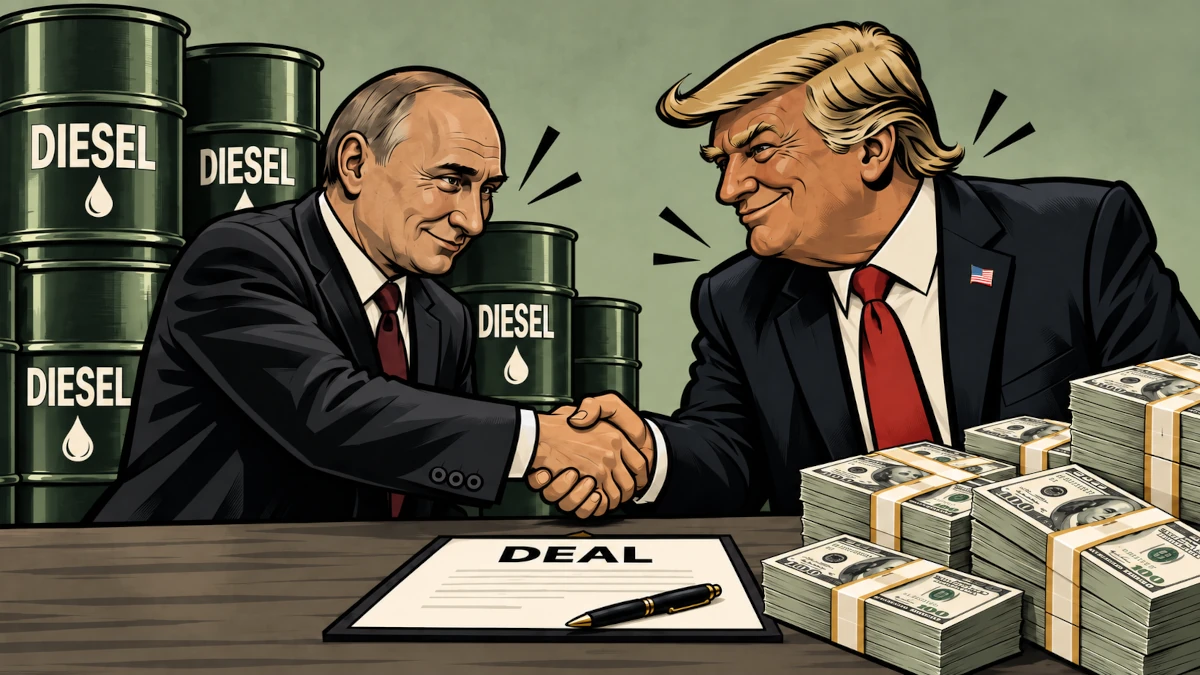
US President Donald Trump has called for Ukraine to stop attacking Russian oil refineries and suggested replacing President Volodymyr Zelenskyy, escalating a dispute over Washington's decision to temporarily ease sanctions on Russian diesel.
Speaking to reporters on Saturday, October 10, Trump linked the strikes to higher fuel costs, saying Zelenskyy "wants to make problems for our farmers, our ranchers, with diesel fuel." He added: "He better damn well stop."
On Sunday, Zelenskyy said Ukraine was prepared to halt attacks on Russian refineries if Moscow stopped striking Ukrainian energy infrastructure, insisting any agreement must be reciprocal and backed by "real guarantees."
The confrontation followed Trump's October 9 telephone conversation with Russian President Vladimir Putin. Trump announced that Moscow would immediately supply more than 300,000 metric tonnes of diesel to US and global markets, followed by 500,000 tonnes in November and another one million tonnes shortly afterwards. A further three million tonnes would depend on Russian refinery capacity.
The Kremlin confirmed Russia's willingness to supply fuel but did not verify the quantities or delivery timetable. Moscow announced Saturday that it had partially lifted restrictions on diesel exports.
The US Treasury issued General License 135, authorising specified transactions involving Russian-origin diesel, including imports into the United States, until April 7, 2027. Broader sanctions against Moscow remain in place.
According to the American Automobile Association (AAA), US diesel averaged US$6.28 a gallon on October 11, virtually unchanged from Friday and below September's record of US$6.53.
Diesel futures initially fell almost 5% following Trump's announcement. However, S&P Global estimated that nearly half of Russia's refining capacity was offline at the end of September, raising questions about its ability to restore exports quickly.
European Union foreign policy chief Kaja Kallas criticised the sanctions relief, warning that additional fuel revenues could help finance Russia's war against Ukraine. She said Europe would not ease its economic pressure on Moscow.
Whether the agreement delivers lasting relief from high US diesel prices remains uncertain. Much will depend on Russia's ability to deliver the proposed quantities and whether those shipments increase global supply or simply redirect fuel from existing markets.

