




US Targets Iran’s Oil Lifeline
Three Tankers Hit as Pressure Builds

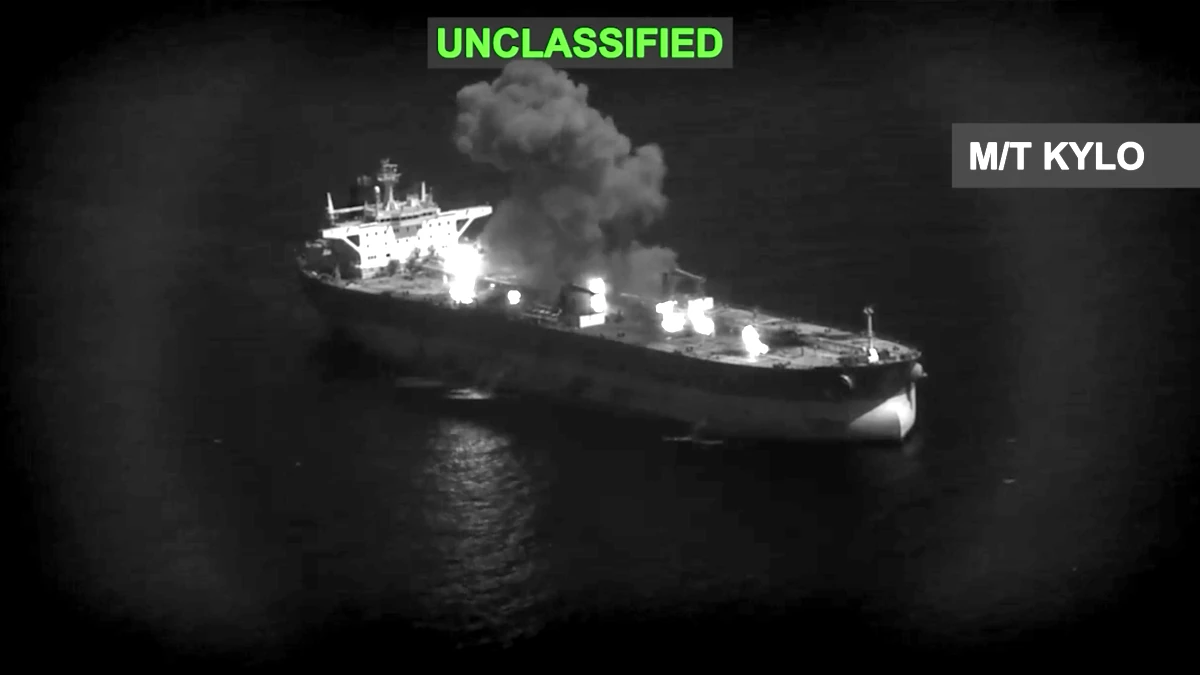
The United States has struck three Iranian oil tankers after Iran fired ballistic missiles towards two US Navy warships, pushing the six-month conflict into a new and potentially more dangerous phase. This time, Washington did not answer by targeting missile launchers, radar stations or military bases. It went after Iran’s oil.
US Central Command said American forces struck the three crude carriers on September 5 after the Islamic Revolutionary Guard Corps launched ballistic missiles towards a US aircraft carrier and guided-missile destroyer. CENTCOM said both warships evaded the attacks and no American personnel were harmed.
The American response was blunt. The M/T Downy was struck off Kharg Island, the centre of Iran’s crude-export system. The M/T Stark 1 was hit near Jask, while the M/T Kylo, also known as the Noxen, was attacked in the Gulf of Oman. CENTCOM said the Downy and Stark 1 were permanently disabled, while the Kylo was destroyed after its crew was ordered to abandon ship.
Despite headlines saying three tankers were “destroyed”, it is more accurate at this stage to say two were disabled and one was destroyed. There is no confirmed evidence that all three sank.
Two Ships In, Three Ships Out
CENTCOM commander Admiral Brad Cooper made clear the strikes were designed to impose an economic cost, not simply neutralise an immediate military threat.
“If you shoot at two of our ships, we will impose an even higher economic cost — taking out three of yours,” Cooper said. CENTCOM also warned that further attacks could be made against Iran’s remaining oil fleet.
That is the important shift. Washington is increasingly targeting not just the weapons Iran uses to fight the war, but the system Iran uses to pay for it.
CENTCOM says the three tankers were part of a multibillion-dollar shipping network funding the Revolutionary Guards and Iranian-backed groups. That is the US military’s characterisation, but it fits a broader American strategy aimed at squeezing Iranian oil exports, foreign-currency earnings and international trade.
In other words, this is increasingly economic warfare with explosives attached.
The Kharg Island Warning
Of the three attacks, the strike on the Downy may be the most significant because of where it happened.
Kharg Island is not simply another Iranian port. Before the war, around 90% of Iran’s crude exports passed through Kharg, according to Reuters. The island contains the terminals, storage facilities and loading infrastructure connecting much of Iran’s oil production with overseas buyers.
Iran is the third-largest producer in OPEC, and oil remains one of the government’s most important sources of foreign income. Yet Kharg has already been squeezed hard. Iran produced about 2.48 million barrels per day in July, while shipping data from Kpler showed just 251,000 barrels per day were loaded in August.
That means Iran is producing far more oil than it is currently managing to ship overseas.
The United States has previously struck military targets on Kharg without directly attacking its oil infrastructure. Hitting a tanker just offshore is different. It does not mean the terminal itself is now a target, but it demonstrates that American forces are willing to attack Iranian oil assets beside the country’s most important export hub.
That message will not have been missed in Tehran.
Iran Hits Back
Iran says it responded by targeting three oil tankers travelling through what it called an “unauthorised route” in the Strait of Hormuz, along with three US-linked vessels elsewhere. Those claims have not all been independently confirmed.
Hormuz remains the dangerous pressure point. Before the war, roughly one-fifth of global oil supplies passed through the Strait. Iran has failed to shut it completely, and Reuters reports that world energy markets have adapted better than Tehran apparently hoped, weakening some of its economic leverage.
That does not mean shipping has returned to normal. Traffic remains far below pre-war levels, while attacks, military escorts and the threat of further escalation continue to make passage expensive and dangerous.
For oil-importing countries such as New Zealand, that matters more than the loss of three individual ships. Disruption in Hormuz feeds into freight, insurance and ultimately fuel prices.
More Than Three Tankers
Three damaged tankers will not transform the global oil market by themselves. What matters is the precedent.
Washington has now deliberately attacked Iranian oil shipping and threatened to do so again. Tehran, meanwhile, is threatening shipping through Hormuz and promising a heavier response to further US attacks.
Both sides are squeezing the same pressure point from opposite directions: Iran wants to make Gulf oil harder to move, while Washington wants to make Iranian oil harder to sell.
The bigger question is whether the United States stops at the tankers.
Because just offshore sits Kharg Island, the valve through which Iran’s oil economy has traditionally flowed.
If that becomes the next target, three tankers may end up looking like the warning shot.

