




Why Is Oil Still Around US$100 a Barrel?
Hormuz Traffic Has Collapsed, Yet Oil Keeps Moving

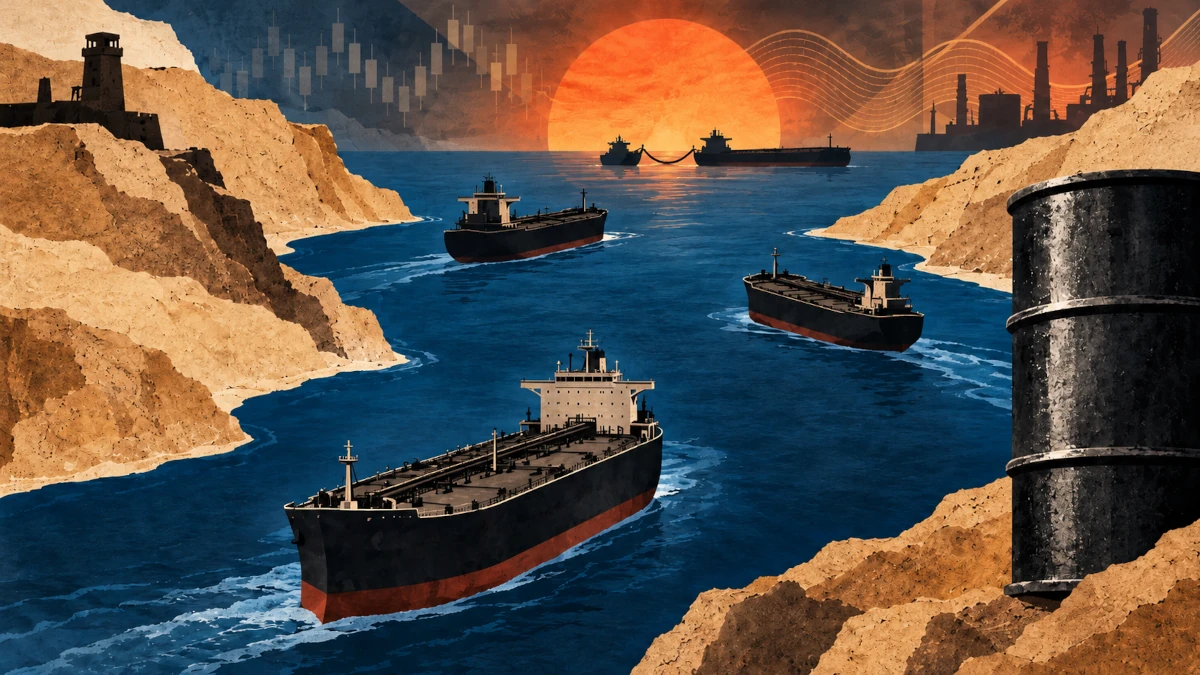
When this article was first published, Brent crude was trading at around US$100 a barrel. Given the disruption in the Strait of Hormuz, the more surprising question was why it was not considerably higher.
Update: Oil prices fell sharply later on September 22 after a senior Iranian official told Reuters that Iran could reopen the Strait of Hormuz within seven days if the United States eases military pressure and lifts its blockade on Iranian ports. Brent subsequently fell below US$98 a barrel, while November West Texas Intermediate dropped below US$90.
The sudden move does not overturn the original argument. If anything, it demonstrates how sensitive oil prices are to the possibility that normal shipping through Hormuz could resume.
Preliminary shipping data showed just two commodity vessels crossed the Strait of Hormuz on Monday, down from around 125 large commercial vessels a day before the conflict with Iran began on February 28. The figures do not capture vessels that may have crossed with their Automatic Identification System transponders switched off.
That gap between visible vessel traffic and actual oil flows helps explain why prices had remained around US$100 rather than moving considerably higher.
Gulf oil has not stopped moving. Producers have increasingly relied on tanker shuttles and ship-to-ship transfers in the Gulf of Oman, allowing crude to continue reaching international markets despite severe disruption to normal shipping.
Kpler estimates around 2.5 million barrels per day will be loaded through ship-to-ship transfers in the Gulf of Oman during September, up from 1.4 million barrels per day in August. Keeping that oil moving is expensive: benchmark freight costs for very large crude carriers carrying Gulf oil to China have climbed above US$30 a barrel.
Saudi Arabia also shifted more crude through its Gulf terminals after drone attacks forced the shutdown of its East-West Pipeline on September 13 and halted crude loadings at Yanbu. On September 20, Saudi Aramco loaded about 14 million barrels onto seven supertankers near Ras Tanura, according to tanker-tracking data.
On September 22, Saudi Arabia restarted the East-West Pipeline at a low rate, providing another potential route around Hormuz and adding to the pressure on oil prices. A return to full capacity could still take weeks.
In other words, visible traffic through the Strait of Hormuz has collapsed, but producers have found expensive and increasingly complicated ways to keep millions of barrels moving.
For now, Brent's earlier resilience near US$100 despite the disruption shows how hard producers have been working to keep oil flowing — while its sudden fall shows how quickly the market can react to signs that Hormuz may reopen.

